
If you are overwhelmed by credit cards, medical bills, personal loans, or collection notices, it is natural to look for a way to combine everything into one manageable payment. Many New Yorkers search for debt consolidation attorneys because they want relief, but they also want to avoid bankruptcy if possible.
That is understandable. Bankruptcy can feel intimidating, and debt consolidation can sound simpler. But the two options do very different things. Debt consolidation is usually a private repayment or settlement strategy. Bankruptcy is a legal process that may stop collections, discharge qualifying debt, and, in some cases, help homeowners deal with mortgage arrears.
The right choice depends on your income, assets, debt types, whether you have been sued, and whether your home is at risk. This article explains the difference in plain English so you can make a more informed decision before deadlines pass.
Debt consolidation attorneys vs bankruptcy: what is the real difference?
A debt consolidation attorney is not usually providing a loan. Instead, an attorney may help evaluate whether consolidation, settlement, debt defense, or bankruptcy makes sense for your circumstances. The attorney may review creditor claims, negotiate settlements, analyze lawsuits, and help you avoid agreements that create more problems than they solve.
Bankruptcy, by contrast, is a court-supervised legal process. When filed properly, bankruptcy can trigger the automatic stay, which generally pauses most collection activity, including many lawsuits, wage garnishments, bank restraints, and foreclosure steps. Bankruptcy may also eliminate qualifying unsecured debts or reorganize debts through a repayment plan.
In other words, the practical question is not simply attorney versus bankruptcy. The real question is whether an out-of-court debt strategy is enough, or whether you need the stronger protections of bankruptcy law.
What debt consolidation usually means
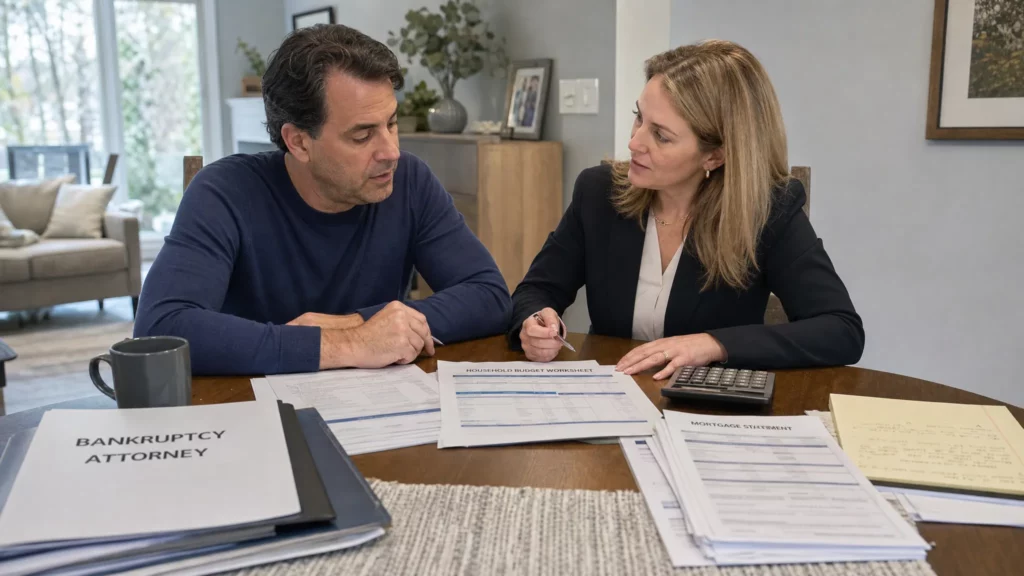
Debt consolidation is often used as a broad term, but it can mean several different things. Some options are legitimate and helpful in the right situation. Others can be risky, especially when a person is already behind or facing legal action.
Common forms of debt consolidation include:
- A personal loan used to pay off multiple debts
- A balance transfer credit card
- A debt management plan through a nonprofit credit counseling agency
- Negotiated settlements with creditors or collectors
- Refinancing or using home equity to pay unsecured debt
These options may reduce the number of monthly payments or lower interest rates. They may also make budgeting easier. But consolidation does not automatically stop lawsuits, erase judgments, prevent wage garnishment, or stop foreclosure.
Debt settlement also deserves special caution. The Consumer Financial Protection Bureau warns that debt settlement companies often ask consumers to stop paying creditors while money builds in a settlement account. During that time, creditors may still sue, interest and fees may continue, and there is no guarantee a creditor will accept a settlement.
A debt consolidation attorney can help you understand whether the proposal in front of you is realistic, legally sound, and safer than alternatives.
What bankruptcy can do that consolidation cannot
Bankruptcy is not a sign of personal failure. It is a legal tool designed to give honest debtors a structured way to address financial hardship. For some New Yorkers, especially those facing lawsuits, garnishments, foreclosure, or debts that cannot realistically be repaid, bankruptcy may provide protections that consolidation cannot.
The most immediate protection is often the automatic stay. Under federal bankruptcy law, the automatic stay generally stops most collection activity after a bankruptcy petition is filed. The U.S. Courts bankruptcy basics guide explains the general structure of bankruptcy relief, including the different chapters available to individuals and businesses.
For individuals and homeowners in New York, the most common bankruptcy chapters are Chapter 7 and Chapter 13.
| Bankruptcy chapter | Basic purpose | Common use |
|---|---|---|
| Chapter 7 | Liquidation bankruptcy that may eliminate qualifying unsecured debt | Credit cards, medical bills, personal loans, and other dischargeable unsecured debts when the debtor qualifies |
| Chapter 13 | Reorganization bankruptcy with a 3-to-5-year repayment plan | Catching up on mortgage arrears, stopping foreclosure, protecting assets, and repaying debts over time |
| Chapter 11 | Reorganization often used by businesses or individuals with complex debt | Business restructuring, larger debt situations, and continued operations where appropriate |
For a deeper overview of bankruptcy basics, CGW has also published Consumer Bankruptcy 101, which explains Chapter 7, Chapter 13, exemptions, and discharge issues in more detail.
Key differences for New York consumers
Debt consolidation and bankruptcy can both affect your financial future, but they work in very different ways. The table below gives a practical comparison.
| Issue | Debt consolidation or settlement | Bankruptcy |
|---|---|---|
| Creditor participation | Usually requires creditor agreement or a new lender willing to extend credit | Creditors are generally bound by bankruptcy law once the case is filed |
| Lawsuits | May not stop a pending lawsuit unless the creditor agrees or the case is defended | The automatic stay may pause many lawsuits and collection actions |
| Wage garnishment or bank restraint | May continue unless resolved separately | The automatic stay may stop many garnishments and restraints, depending on the facts |
| Credit card and medical debt | May be repaid, refinanced, or settled | May be discharged if the debt qualifies |
| Mortgage arrears | Usually not enough by itself to cure serious arrears | Chapter 13 may allow arrears to be repaid over time while ongoing mortgage payments continue |
| Home risk | Using home equity to consolidate unsecured debt can put the home at greater risk | Exemptions and Chapter 13 planning may help protect a home, depending on equity and income |
| Tax issues | Forgiven debt may create tax consequences in some cases | Discharged debt in bankruptcy is generally treated differently for tax purposes, but tax advice may still be needed |
| Public record | Usually private unless litigation or judgments are involved | Bankruptcy filings are public court records |
No option is automatically better for everyone. A manageable consolidation plan can be appropriate for someone with steady income and no active lawsuits. Bankruptcy may be more appropriate when creditors are already taking legal action or when debt has become impossible to repay within a realistic budget.
When debt consolidation may make sense
Debt consolidation may be worth considering when your financial distress is serious but still manageable. This often means you have steady income, your essential expenses are under control, and you are not already facing multiple lawsuits or enforcement actions.
For example, consolidation may help if most of your debt is high-interest credit card debt, you qualify for a lower-interest loan, and the new payment truly fits your monthly budget. A nonprofit debt management plan may also help some consumers reduce interest rates and pay debts in a structured way.
An attorney can be especially helpful when collection accounts are involved. Before paying or settling older debt, it may be important to know whether the creditor can still sue you. New York’s Consumer Credit Fairness Act shortened the statute of limitations for many consumer credit transactions and added important protections for debtors. CGW discusses those changes in How the New York Consumer Credit Fairness Act Benefits Debtors.
Debt consolidation may be a better fit when:
- You can afford the proposed payment without falling behind on rent, mortgage, utilities, food, insurance, or taxes
- You are not using your home as collateral for unsecured credit card or medical debt
- You have not been served with multiple lawsuits or enforcement notices
- The creditor or collector will provide a clear written settlement agreement
- The total repayment amount is realistic compared with your income
- You understand any tax, credit, or legal consequences before agreeing
The key word is realistic. A consolidation plan that only works on paper may delay the problem while interest, late fees, lawsuits, or foreclosure pressure continue to build.
When bankruptcy may be the better tool
Bankruptcy may be worth discussing when debt has moved beyond ordinary budgeting problems. If you are being sued, facing wage garnishment, dealing with a frozen bank account, or receiving foreclosure papers, you may need legal protection rather than another payment arrangement.
Chapter 7 may help people who have limited income and mostly unsecured debts, such as credit cards, medical bills, or personal loans. It can provide a fresh start if the person qualifies and if assets are protected by exemptions.
Chapter 13 may be more useful for homeowners who need time to catch up on mortgage arrears. In a Chapter 13 case, a homeowner may be able to propose a plan to repay arrears over time while staying current on ongoing mortgage payments. This can be especially important when foreclosure has already started.
CGW has written more about the differences between the two chapters in Chapter 7 vs Chapter 13 Bankruptcy in Westchester and the Hudson Valley.
Bankruptcy may deserve serious consideration if:
- Your debt payments are greater than your realistic monthly surplus
- You have been served with a creditor lawsuit
- A judgment, wage garnishment, or bank restraint is already in place
- You are behind on your mortgage and foreclosure is pending or likely
- You need a court-supervised way to address debt rather than voluntary creditor cooperation
- You have tried consolidation before and the debt has continued to grow
For many residents of Westchester, Rockland, Putnam, Orange, Dutchess, and Bronx County, bankruptcy cases are generally handled in the U.S. Bankruptcy Court for the Southern District of New York. Local procedure, trustee expectations, exemptions, and foreclosure timing can all matter.
A special warning for New York homeowners
If you own a home, be especially careful before using home equity to consolidate unsecured debt. Credit card debt and medical debt are usually unsecured, meaning the creditor does not automatically have a mortgage on your home. But if you refinance, take a home equity loan, or use another secured product to pay those debts, you may be converting unsecured debt into debt secured by your home.
That can be dangerous. If the new payment becomes unaffordable, you may have placed your home at risk for debts that might otherwise have been negotiated, defended, or discharged in bankruptcy.
This issue is especially important for homeowners in Westchester County, Rockland County, Putnam County, Orange County, Dutchess County, the Bronx, and the Lower Hudson Valley, where home values and living costs can be high. Home equity can be an important asset, but it should be evaluated carefully before it is used to pay old unsecured debt.
If mortgage arrears are already part of the problem, consolidation alone may not be enough. Other options may include foreclosure defense, a loan modification, bankruptcy, short sale planning, or a combination of strategies. CGW explains how foreclosure and bankruptcy can overlap in When Foreclosure and Bankruptcy Overlap for New York Homeowners.
What if you have already been sued by a creditor?
If you have been served with a summons and complaint, do not ignore it. A debt consolidation plan does not automatically answer the lawsuit for you. If you miss the deadline to respond, the creditor may seek a default judgment.
Once a judgment is entered, the creditor may have additional collection tools, including wage garnishment, bank restraints, and liens in certain circumstances. New York law provides important debtor protections, but those protections usually work best when raised properly and on time.
A lawyer can review whether the creditor has the documents needed to prove the debt, whether the statute of limitations has expired, whether the lawsuit was served properly, and whether settlement or bankruptcy should be considered. CGW discusses these issues further in Debt Lawsuits and Your Home: When a New York Bankruptcy Attorney Can Help.
The most important step is to act before a default judgment or enforcement action makes the problem harder to fix.
How to decide between consolidation and bankruptcy
There is no one-size-fits-all answer. The best option depends on your full financial picture, not just the amount you owe.
| Question to ask | Why it matters |
|---|---|
| Are you current on your mortgage or rent? | Housing stability should usually come before unsecured debt repayment |
| Have you been sued or garnished? | Active legal action may require immediate legal response |
| Can you afford a consolidation payment for the full term? | A payment that is too high can lead to default and more debt |
| Are you using home equity to pay unsecured debt? | This may increase the risk to your home |
| Do you qualify for Chapter 7 or Chapter 13? | Eligibility affects whether bankruptcy is practical |
| Do you have tax debt, student loans, support obligations, or recent debts? | Some debts are treated differently and may not be discharged easily |
| Is foreclosure pending? | Timing can be critical, especially if a sale date is approaching |
A useful way to think about the decision is this: consolidation works best when creditors are cooperative and your budget can support repayment. Bankruptcy may be more appropriate when you need legal protection, a discharge, or a structured court process to deal with debt and protect essential assets.
Documents to gather before speaking with an attorney
Whether you are considering debt consolidation, bankruptcy, or both, good information helps an attorney give meaningful guidance. Try to gather:
- Recent pay stubs or proof of income
- Bank statements
- Credit card and collection statements
- Lawsuit papers, judgments, garnishment notices, or bank restraint notices
- Mortgage statements, foreclosure papers, or loan modification correspondence
- Tax returns
- A list of monthly household expenses
- Any settlement offers or debt consolidation proposals you have received
Do not worry if you do not have everything. If you are under pressure from a lawsuit, foreclosure, or garnishment, it is often better to ask for help quickly and supplement documents later.
Why timing matters
Waiting rarely improves a serious debt problem. Interest may continue. Lawsuit deadlines may pass. Judgments may be entered. Foreclosure cases may move toward settlement conferences, motion practice, judgment of foreclosure and sale, or auction.
Early legal advice can preserve options. A consumer who acts before judgment may have defenses or settlement leverage. A homeowner who acts before a foreclosure sale may have more time to evaluate bankruptcy, loan modification, or other home-saving strategies. A person considering bankruptcy may be able to avoid mistakes, such as transferring property, draining retirement funds, or taking on risky secured debt.
You do not need to know the perfect solution before speaking with an attorney. The purpose of the consultation is to understand the options and risks before choosing a path.
Frequently Asked Questions
Can a debt consolidation attorney stop a creditor lawsuit in New York? An attorney may be able to defend the lawsuit, negotiate a settlement, or evaluate bankruptcy options, but consolidation by itself does not automatically stop a lawsuit. If you have been served, you should act quickly because court deadlines may apply.
Is bankruptcy better than debt consolidation? Not always. Debt consolidation may work when the debt is manageable and creditors cooperate. Bankruptcy may be better when you need legal protection, are facing lawsuits or garnishment, or cannot realistically repay the debt. Every case depends on the facts.
Will bankruptcy stop foreclosure in New York? Bankruptcy may temporarily stop many foreclosure actions through the automatic stay. Chapter 13 may also allow some homeowners to repay mortgage arrears over time, depending on income, equity, and the feasibility of the plan. It is important to seek advice before a foreclosure sale date.
Can I consolidate debt after being sued? Possibly, but a lawsuit creates added urgency. You may still need to answer the complaint or address the case in court. A settlement should be in writing and should clearly state what happens to the lawsuit, judgment, and any collection activity.
Does debt consolidation hurt credit less than bankruptcy? It depends. Missed payments, settlements, charged-off accounts, judgments, and bankruptcy can all affect credit. A consolidation plan that fails may cause more long-term harm than a carefully planned legal solution. Credit impact should be considered, but it should not be the only factor.
Should I use a home equity loan to pay credit cards? Be cautious. Using home equity to pay unsecured credit card debt can put your home at risk if you later cannot make the new payments. Homeowners should speak with qualified counsel before converting unsecured debt into debt secured by a home.
Speak with a New York debt and bankruptcy attorney before options narrow
If you are comparing debt consolidation attorneys vs bankruptcy in New York, you are already taking an important step. The next step is to understand which option fits your actual situation, including your income, assets, lawsuits, mortgage status, and long-term goals.
Clair Gjertsen & Weathers PLLC helps New Yorkers facing debt lawsuits, creditor pressure, bankruptcy questions, foreclosure, and mortgage-related hardship. The firm works with clients throughout Westchester County, Rockland County, Putnam County, Orange County, Dutchess County, Bronx County, and the Lower Hudson Valley.
If you are unsure whether consolidation, bankruptcy, foreclosure defense, or another strategy is right for you, consider speaking with experienced legal counsel before deadlines pass. Early action may create more options and reduce the risk of avoidable financial harm.