
A debt collection lawsuit can feel overwhelming, especially when it arrives at the same time as missed mortgage payments, medical bills, credit card balances, or other financial pressure. Many New Yorkers assume that if a debt buyer or creditor has filed a case, the outcome is already decided. That is not true.
Debt collection attorneys who defend consumers can review whether the creditor has the right to sue, whether the lawsuit was filed on time, whether the amount claimed is accurate, and whether the collector followed New York and federal law. In many cases, consumers have more options than they realize, but the timing matters. Waiting too long can lead to default judgments, frozen bank accounts, wage garnishments, and added stress.
This article explains how consumer defense works in New York, what an attorney looks for, and why early action can make a meaningful difference.
What Debt Collection Attorneys Do for Consumers
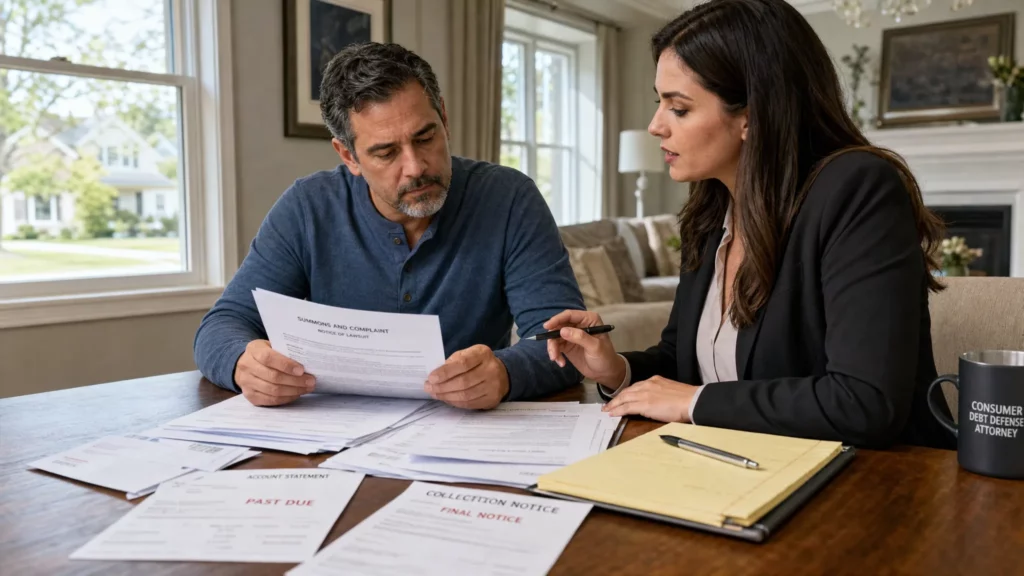
Consumer debt defense is not simply about arguing that someone cannot afford to pay. It is about making sure the party suing can prove its case and that the consumer’s legal rights are protected throughout the process.
In New York, debt lawsuits may involve credit card balances, personal loans, medical debt, retail financing accounts, auto deficiency balances, or debts purchased by third-party debt buyers. A debt buyer may not be the original creditor. It may have purchased a portfolio of charged-off accounts, sometimes with limited documentation. That distinction matters because the plaintiff still has to prove ownership of the specific account and the amount allegedly owed.
A defense attorney may help by:
- Reviewing the summons, complaint, and supporting documents
- Determining whether the consumer was properly served
- Filing an answer before the deadline when appropriate
- Raising legal defenses and counterclaims
- Demanding proof through discovery
- Challenging defective affidavits or account records
- Negotiating settlements or payment terms
- Seeking to vacate default judgments when grounds exist
- Coordinating debt defense with bankruptcy or foreclosure defense when needed
The goal is not to create false hope or guarantee a dismissal. The goal is to make the creditor prove its case, protect the consumer from improper collection practices, and identify the most practical path forward.
Why Responding Quickly Matters in a New York Debt Lawsuit
A consumer debt case often begins with a summons and complaint. The papers may come from a creditor, a debt buyer, or a law firm collecting on behalf of a creditor. The complaint usually states that the consumer owes a certain amount and asks the court to enter judgment.
If the consumer does not respond, the creditor may ask the court for a default judgment. A judgment can create serious consequences. Depending on the circumstances, it may allow the creditor to pursue income executions, restrain bank accounts, or place a lien against real property in the county where the judgment is entered or docketed.
New York has strengthened protections for consumers in recent years. For example, the New York Consumer Credit Fairness Act changed important rules affecting consumer credit lawsuits, including time limits and documentation requirements. These protections can be valuable, but they usually must be raised properly and at the right time.
The most important first step is simple: do not ignore court papers. Even if you believe the debt is old, already paid, inflated, or not yours, failing to answer can make the case harder to defend later.
Common Defenses in New York Consumer Debt Cases
Every case is different, and no defense applies automatically. However, consumer debt collection attorneys commonly evaluate several issues before recommending a strategy.
| Defense issue | Why it matters | What an attorney may review |
| Improper service | A lawsuit may be defective if the consumer was not served according to New York rules | Affidavit of service, address used, method of delivery, timing |
| Statute of limitations | Some debts are too old to sue on | Date of last payment, charge-off date, account history, type of debt |
| Lack of standing | A debt buyer must prove it owns the specific debt | Assignment documents, bill of sale, account schedules, chain of title |
| Incorrect amount | Balances may include disputed fees, interest, or errors | Statements, payment records, interest calculations, settlement history |
| Insufficient proof | The plaintiff must support its claim with admissible evidence | Affidavits, account agreements, business records, witness knowledge |
| Identity or account dispute | The wrong person may be sued, or the account may involve fraud | Personal identifiers, account usage, credit reports, prior disputes |
| Collection law violations | Collectors must follow federal and state rules | Communications, threats, misrepresentations, harassment, notice issues |
Federal law also gives consumers rights. The Consumer Financial Protection Bureau explains that debt collectors generally may not use abusive, unfair, or deceptive practices, and consumers have rights when dealing with collectors under federal debt collection rules. You can review the CFPB’s overview of debt collection rights for general background.
These defenses are fact-sensitive. A consumer who has been sued should not assume that a debt is unenforceable just because it is old, sold to a debt buyer, or missing documents in the first mailing. At the same time, a consumer should not assume the plaintiff can prove everything it alleges.
How Attorneys Build a Debt Collection Defense
A strong defense usually starts with documents. The attorney reviews the court papers, account records, payment history, correspondence, and any collection notices the consumer received. If the case involves a debt buyer, the attorney may look closely at whether the assignment documents actually connect the plaintiff to the consumer’s specific account.
This document-focused approach is common in many civil disputes. Complex cases often turn on whether the claimant can organize and prove each disputed item. In construction litigation, for example, expert reports and Scott schedules are often used to clarify disputed work and costs, a process described by building consultants who support litigation. Consumer debt defense is a different area of law, but the broader lesson is similar: organized proof matters.
In a New York debt lawsuit, an attorney may file an answer denying allegations and asserting defenses. The attorney may then request documents through discovery, challenge the plaintiff’s evidence, appear in court conferences, and negotiate when appropriate. Sometimes the best result may be dismissal. In other cases, a practical settlement, affordable payment arrangement, or bankruptcy strategy may better serve the client’s long-term interests.
What If a Default Judgment Has Already Been Entered?
Many consumers first learn about a debt lawsuit after their bank account is frozen or their wages are threatened. This can happen when the creditor obtained a default judgment because the consumer did not answer the complaint.
A default judgment does not always end the matter. Depending on the facts, an attorney may consider whether there are grounds to ask the court to vacate the judgment. Common issues include improper service, lack of notice, excusable default, or a potentially valid defense to the case. The requirements depend on the circumstances, and timing can be important.
If a judgment is valid, the attorney may still explore options such as negotiating a reduced payoff, arranging payment terms, asserting exemption rights, or considering bankruptcy if the overall debt situation is unmanageable.
New York has also changed the financial impact of certain consumer debt judgments. The Fair Consumer Judgment Interest Act reduced the interest rate on qualifying consumer debt judgments, which can make a major difference for people facing old judgments that have grown over time.
Protecting Wages, Bank Accounts, and Property
A major reason to speak with a debt collection defense attorney is to understand what a judgment creditor can and cannot do. Collection threats often sound more absolute than the law allows.
For example, some income may be protected from garnishment, and certain funds in a bank account may be exempt from restraint depending on their source and amount. Social Security, public benefits, and other protected funds may require prompt action if they are frozen. A consumer should not assume that a bank restraint is lawful just because it occurred.
Homeowners have additional concerns. A debt judgment is different from a mortgage foreclosure, but it can still create risk if it becomes a lien against real estate. If you own a home and are also being sued for consumer debt, it is important to understand how debt lawsuits and foreclosure differ in New York so you can make informed decisions.
This is especially important for homeowners in Westchester County, Rockland County, Putnam County, Orange County, Dutchess County, the Bronx, and the Lower Hudson Valley, where home equity, mortgage arrears, and consumer debt problems can overlap. A strategy that handles only the collection lawsuit, without considering the home, may be incomplete.
Settlement Is Not Just About the Dollar Amount
Many debt cases resolve through settlement. However, a settlement should be reviewed carefully before signing. A low monthly payment may still create problems if the agreement includes harsh default terms, automatic judgment provisions, broad admissions, or unclear reporting obligations.
An attorney can help evaluate questions such as:
- Is the plaintiff able to prove the debt if the case continues?
- Is the settlement amount realistic based on income and expenses?
- Will the agreement result in a judgment, dismissal, or discontinuance?
- What happens if one payment is missed?
- Does the settlement resolve the full balance and related claims?
- Are there tax or credit reporting consequences to consider?
The right settlement depends on the strength of the defense, the consumer’s financial situation, and the risk of litigation. A settlement that works for one person may not work for another.
When Bankruptcy May Be Part of the Solution
Debt collection defense focuses on the lawsuit in front of you. Bankruptcy looks at the broader financial picture. For some consumers, defending one lawsuit is enough. For others, the lawsuit is only one symptom of a larger debt problem.
Chapter 7 bankruptcy may eliminate qualifying unsecured debts for eligible individuals. Chapter 13 bankruptcy may allow a person to reorganize debts over time, including mortgage arrears in some cases. Chapter 11 may be relevant for certain small business owners or individuals with more complex financial circumstances.
Bankruptcy can also trigger an automatic stay, which may stop many collection actions while the case is pending. That can be especially important for consumers facing wage garnishment, bank restraints, foreclosure pressure, or multiple creditor lawsuits. Bankruptcy is not right for everyone, and it should be evaluated carefully, but it is a legal financial tool, not a personal failure.
How to Choose a Debt Collection Defense Attorney in New York
When you are under pressure, it can be tempting to hire the first person who promises a fast result. Be careful. Debt collection defense should involve a realistic review of the documents, the court status, the amount at issue, and your broader financial goals.
Consider asking:
- Does the attorney regularly handle consumer debt defense in New York courts?
- Can they explain the lawsuit and deadlines in plain language?
- Will they review whether the plaintiff has standing and adequate proof?
- Can they evaluate settlement, litigation, and bankruptcy options together?
- Do they understand how a judgment may affect wages, bank accounts, and homeownership?
The best approach is usually practical and individualized. Some cases should be fought aggressively. Some should be settled carefully. Some require bankruptcy or a coordinated plan involving foreclosure defense, mortgage arrears, or other financial issues.
Frequently Asked Questions
Do I need an attorney if I really owe the debt? You may still benefit from legal advice. Even if a debt is valid, the plaintiff must follow proper procedures, prove the amount owed, and comply with applicable law. An attorney may also help negotiate terms that are more manageable.
Can a debt collector sue me after the statute of limitations expires? A time-barred debt may provide a defense, but you should not ignore the lawsuit. Statute of limitations issues must be analyzed based on the type of debt, payment history, and applicable New York law.
What happens if I missed the deadline to answer? You may still have options, especially if no judgment has been entered or if there were problems with service. If a default judgment already exists, an attorney can review whether there are grounds to ask the court to vacate it.
Can a creditor take my entire paycheck? Generally, wage garnishment is subject to legal limits, and some income may be protected. The exact analysis depends on your income, the type of debt, and whether a judgment has been entered.
Will bankruptcy stop a debt collection lawsuit? Bankruptcy may stop many collection actions through the automatic stay, depending on the circumstances. Whether bankruptcy is the right choice depends on your full financial situation, assets, income, debts, and goals.
Speak With a New York Consumer Debt Defense Attorney
If you have received a summons, collection notice, wage garnishment warning, bank restraint, or judgment paperwork, do not assume you are out of options. The earlier you seek guidance, the more time you may have to respond, raise defenses, protect exempt income, and evaluate settlement or bankruptcy alternatives.
Clair Gjertsen & Weathers PLLC helps New York consumers, homeowners, and families navigate debt lawsuits, foreclosure concerns, bankruptcy options, and related financial challenges. If you are facing a collection case in Westchester County, the Lower Hudson Valley, the Bronx, or the surrounding region, consider speaking with an experienced attorney before deadlines pass. Every case is unique, and a focused legal review can help you understand the path forward with greater clarity and confidence.