NY & CT Foreclosure & Bankruptcy Attorneys
Schedule A Free Consultation 914.472.6202


The Consumer Financial Protection Bureau has finalized new mortgage servicing guidelines. These new guidelines, known as the 2021 Mortgage Servicing COVID-19 Rule, are designed to give homeowners who suffered hardship due to the pandemic a path to get back on track with their mortgage while also encouraging loan servicers to evaluate borrowers for loan modification instead of commencing a foreclosure action in 2021. This Rule is effective August 31, 2021, the day after New York’s foreclosure moratorium is scheduled to end.
Streamline Mortgage Loan Modifications
The 2021 Mortgage Servicing COVID-19 Rule encourages servicers to offer streamlined loan modifications, which are loan modifications offers made without a complete evaluation of the borrower’s financial situation. The Rule also prohibits interest accrual on any delayed portion of the loan, which is due at maturity, this is commonly known as a balloon payment.
New Mortgage Loan Procedural Safeguards
The 2021 Mortgage Servicing COVID-19 Rule includes additional procedural safeguards for the period of August 31, 2021 through December 31, 2021. During this period, a loan can only be referred for foreclosure if
- the property is abandoned,
- the borrower is unresponsive to servicer outreach, or
- the borrower has been evaluated based on a complete loss mitigation application.
Principal Residence Mortgages Only
The Rule applies only to the borrower’s principal residence and not to investment properties, second homes, or reverse mortgages. The Rule also does not apply if the loan was more than 120 days delinquent before March 1, 2020 or if the statute of limitations will expire before January 1, 2022.
Have questions about the new mortgage servicing guidelines from the CFPB?
We are an experienced real estate and loan modification law firm that has helped thousands of clients with real estate transactions and mortgage loans. We understand that the mortgage loan servicing guidelines can be a bit overwhelming, and that is why we’re here to help you. Please give us a call to schedule a free consultation at 914.472.6202.

President’s Biden’s American Rescue Plan Act of 2021, put the repayment of federal student loans on pause, interest-free through the end of September for a total of 18 months. Over 44 million Americans have unpaid student loan debt totaling more than 1.6 trillion dollars, and as September is only a few months away, you may be wondering, if there is any way to eliminate that debt?
Can student loan debt be discharged in bankruptcy?
For a long time, if you had considered a bankruptcy filing to relieve your student loan debt, an attorney might have told you that your student loans cannot be discharged in bankruptcy. While this statement is not accurate, the bar is high and the process is more burdensome than it is for other types of debt. In order to qualify for a discharge of this type of debt, the filer (aka “Debtor”) would have to bring a lawsuit (“Adversary Proceeding”) within the bankruptcy and have to prove an undue hardship as outlined in section 523(a)(8) of the Bankruptcy Code.
What is an Adversary Proceeding?
Under the U.S. Bankruptcy Code, an adversary proceeding is “a proceeding to determine the dischargeability of a debt.” Effectively, it is a lawsuit within your bankruptcy, whereby you are suing the holder of your student loans for a discharge of your student loan debt.
What does the Bankruptcy Court Consider when reviewing your Student Loans?
In order to have the Court agree to discharge your student loans, you have to prove that repaying them would cause you an “undue hardship”. The Court will also consider if you’re seeking a discharge of your student loans in good faith. This means the Court will look at your history of payments to see if you tried to repay your loans, how many payments you made, etc…
Undue Hardship Standard:
In determining what constitutes an undue hardship, most Courts adhere to a three-part test created by the Second Circuit in Brunner v N.Y. State Higher Educ. Servs. Corp., 831 F.2d 395 (2d Cir. 1987). The “Brunner Test” provides that student loan debt can be discharged if the debtor establishes by a preponderance of the evidence that:
- He/She cannot maintain, based on current income and expenses, a minimal standard of living for himself/herself and his/her dependents if forced to repay the loans;
- Additional circumstances exist indicating that this state of affairs is likely to persist for a significant portion of the repayment period; and
- He/She has made good faith efforts to repay the loans.
Courts have generally only granted a discharge of student loan debt through the Brunner Test based on dire circumstances. For example, a court may consider a minimal standard of living if:
- Your income has been below the federal poverty level for several years and does not show signs of improving
- You are on public assistance or dependent on a family member
- You have a debilitating mental or physical illness or permanent injury
- You have a child with a serious illness who requires round-the-clock care
- Divorce reduced your family income with no hope of it returning to its previous level
- Disability checks are your only source of income
- You depend on public assistance to support your children
- You support a spouse who was seriously and permanently injured in a car accident or who has developed a total disability
The bottom line depends on your situation, as well as whether the student loan creditors are willing to work with you and acknowledge your undue hardship. These creditors are big companies with attorneys representing them, which is a good reason why you would want an experienced attorney representing you through this process.
Student Loan Mediation Before Litigation Program (SLM Program)
If you are not sure if you qualify for a discharge under the “Undue Hardship Standard”, but are having difficulty paying your student loans, the United States District Bankruptcy Court for the Southern District recently created a program, as of January 27, 2020, to help resolve student loan disputes through a court-supervised mediation process. This new program has created a forum for debtors and creditors to discuss consensual repayment options for government student loans and possible workouts for private student loans.
The SLM Program facilitates two different types of Student Loan negotiations:
- Requests for Student Loan Repayment Option Relief, such as a loan modification and
- Requests for resolution over disputes over the dischargeability of a Student loan debt.
What are examples of Student Loan Repayment Option Relief?
- Deferment
- Forbearance
- Rehabilitation
- Consolidation
- Income-Based Repayments
What counties are included within the Southern District of New York?
- Westchester
- Rockland
- Putnam
- Orange
- Dutchess
- Sullivan
- New York
- Bronx
We Can Help You File Bankruptcy With Student Loan Debt
While you do not technically have to go through an attorney when filing bankruptcy on student loans, bankruptcy and the student loan process can be an incredibly complex process. It requires determining which type of bankruptcy you’ll file and bringing an adversary proceeding, or filing for the SLM Program. Going through it alone could mean extra time, incorrect filings and, possibly a lost case. We are an experienced student loan bankruptcy law firm who has helped thousands of people in financial distress. We understand that student loans can be overwhelming and daunting and are here to help you through the process. Please give us a call to schedule a free consultation at 914.472.6202.

Clair Gjertsen & Weathers PLLC is proud to announce that Wendy Marie Weathers has once again been
recognized for her experience in the field and has been invited to lecture on bankruptcy before fellow
attorneys. Wendy will be presenting “The Means Test in Consumer Bankruptcy Cases” as a Live Webinar
on June 30, 2021.
More information on the program can be found here: https://www.lorman.com/training/banking/the-
means-test-in-consumer-bankruptcy-cases?discount_code=O7070983&p=15999&s=direct#faculty
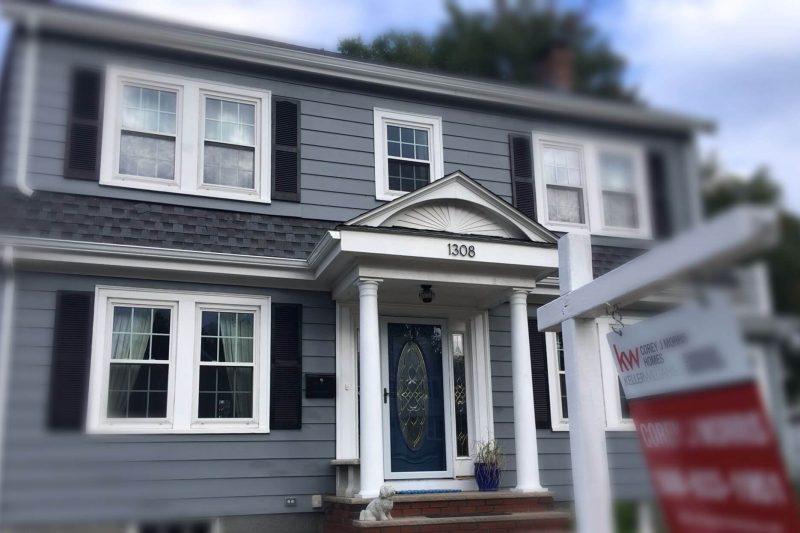
With the foreclosure moratorium created by the COVID-19 Emergency Eviction and Foreclosure Prevention Act of 2020 expiring on August 31, 2021, a surge of Foreclosure Auction Sales will be coming. If you are at risk of losing your home, this article explains how a Foreclosure Auction Sale works and how to stop it.
How does a Foreclosure Auction Sale Work?
Foreclosure Auction Sales most often occur when a party is unable to pay a mortgage. If the lender can show that they followed the laws and procedures as mandated by the State, then a judgment will be granted, and the Court will order that a Foreclosure Auction Sale take place.
Generally, for the lender to proceed to a Foreclosure Auction Sale, its attorneys must first serve you with the Notice of Sale, as well as publishing the Notice of Sale in a general circulation publication, which the Court will order, such as the Journal News in Westchester. Once all notices have been given, the Foreclosure Auction Sale is usually held in the Courthouse of the Supreme Court of the County in which the foreclosed property is located. While Foreclosure Auction Sales are open to the public, state law prevents you from bidding on your own home.
The Foreclosure Auction Sale is then conducted by a Referee, with the highest bidder being deemed the winner. The Referee is an attorney, who has been appointed by the Court to conduct the auction. The Referee’s role is to prepare all documents, conduct the auction sale, and then prepare the property transfer documents and convey all funds to the lender after the auction.
Can a Foreclosure Auction Sale be stopped?
Under New York State law, you can stop a Foreclosure Auction Sale using many methods. Because state law requires an extensive pre-foreclosure process and an equally burdensome foreclosure process, you can delay or even stop the Foreclosure Auction Sale from occurring.
If you are wondering how to stop a Foreclosure Auction Sale, you should heavily consider speaking with an experienced foreclosure defense attorney. The foreclosure process is a complicated maze, requiring persistence and patience. An experienced foreclosure attorney can help you maneuver through this process and give you the best chance to keep your home.
How can you save your Home from a Foreclosure Auction Sale?
There are several ways to save your home from foreclosure. Below are five ways that can help you stop a Foreclosure Auction Sale from taking place to keep your home. Please read through these options carefully.
1. Filing for bankruptcy
Though filing for bankruptcy will momentarily help you stop a foreclosure auction of your home and potentially give you the ability to stay in your home long term through a court-supervised loan modification review, it may not always be the best choice, if you have assets. If you are contemplating filing for bankruptcy, you should learn everything you can about the bankruptcy process before filing and speak to experienced bankruptcy attorneys who can help guide you through the decision. Clair Gjertsen & Weathers PLLC can evaluate your case and determine if filing bankruptcy is the best option to stop the Foreclosure Auction Sale.
2. Applying for a loan modification
After submission and approval of an application, the lender can agree to several loan modifications to make your mortgage payments easier. Examples of loan modifications include:
- Lowering monthly payments and increasing the years on your term;
- Lowering interest rates;
- Restructuring your mortgage to include the delinquent amount as a balloon payment; and
- Forgiving a portion of the delinquent conditionally or even unconditionally.
Each lender has different restrictions on what they can offer you for a modification. You must reach out to your lender as soon as possible to explore these options.
3. Reinstating the terms of your loan
Reinstatement occurs when you bring the delinquent loan current in one lump sum payment. Reinstating a loan stops a foreclosure because you catch up on the defaulted payments. You would also have to pay any overdue fees and expenses incurred because of the default. Once the loan is reinstated, you resume making regular payments on the debt.
4. Paying off the loan in its entirety
A payoff occurs when you pay the total amount required to satisfy the loan balance completely. Paying off the loan stops a foreclosure as the loan would be deemed satisfied. Paying off the loan also removes the mortgage as a lien against your home.
5. Challenge the Foreclosure Action
Foreclosure actions are very procedural in nature and the bank’s burden extends to more then simply showing that there was a default in the mortgage payment. It is the bank’s burden to prove through the foreclosure process that they have complied with all procedures and pre-foreclosure notices. Oftentimes, especially when foreclosure actions are unopposed, a bank’s motion will be granted, despite insufficient proof of compliance with many of these procedures.
Throughout the process, you can fight and expose these mistakes to the Court, which could result in a delay of the Foreclosure Auction Sale or could prevent one from ever taking place. Even if you have failed to appear before the Court, you may still have the right to bring these mistakes to the Court’s attention. Clair Gjertsen & Weathers PLLC can evaluate your case and determine what mistakes were made by the lender to give you the best chance at stopping the Foreclosure Auction Sale.
Having questions about an upcoming Foreclosure Auction Sale on your Home?
If you are trying to stop a foreclosure auction of your home, time is of the essence, and the matter of utmost importance is returning your home into your possession. Clair Gjertsen & Weathers PLLC has been helping people through this complex process for the last 40-years. We offer free initial consultations to see which option is the best fit for you to stop a foreclosure auction sale to keep your home. Please give us a call at 914.472.6202.

Court strikes down a challenge to hardship declaration.
On May 4, 2021, Governor Cuomo extended the COVID-19 Emergency Eviction and Foreclosure Prevention Act of 2020. This extension acts to prolong the moratorium on foreclosures and evictions until August 31, 2021, for mortgagors who have suffered a COVID-related hardship.
How does the Act affect residential eviction proceedings?
The Act places a moratorium on residential evictions until August 31, 2021, for tenants who have endured COVID-related hardship. Tenants must submit a hardship declaration to their landlord or the court, or a document explaining the source of the hardship, to prevent evictions. The declaration allows for an eviction to be stayed if the tenant qualifies under one of two different categories: a financial hardship as a result of COVID-19; or if moving would pose a significant health risk to the tenant or someone in the tenant’s household as it would pose a risk for severe illness or death from COVID-19.
How does the Act affect commercial eviction proceedings?
The Act places a moratorium on evictions until August 31, 2021, for commercial tenants that have endured COVID-related hardship. The legislation applies to small businesses with under 50 employees that demonstrate a financial hardship. Tenants must submit a hardship declaration to their landlord or a document explaining the source of the hardship, to prevent an eviction proceeding.
How does the Act affect residential foreclosure proceedings?
The Act places a moratorium on residential foreclosures until August 31, 2021, for residential mortgagors that have endured COVID-related hardship. Homeowners and small landlords who own 10 or fewer residential dwellings can file hardship declarations with their mortgage lender, other foreclosing party, or a court that would prevent foreclosure.
How does the Act affect commercial foreclosure proceedings?
The Act also allows commercial mortgagors meeting certain conditions to file a hardship declaration with their mortgage lender, other foreclosing party, or the court to prevent the filing of a foreclosure action or stay any foreclosure action in progress until August 31, 2021. To qualify for such relief, a mortgagor seeking such relief must own a property containing ten or fewer commercial units, must be a business that is resident of the state which is independently owned and operated (not dominant in its field), and employ 50 or fewer persons.
Can a hardship declaration be challenged by a Bank in a foreclosure proceeding?
In the recent case of Southern Acquisition Co. LLC v. TNT, LLC, No. EF2014-1033, 2021 WL 1307843 (N.Y. Sup. Ct. Apr. 6, 2021) provided a thorough analysis of the Act and found that the bank does have the ability to challenge a hardship declaration submitted by a commercial mortgagor.
In this action, the bank filed the motion to invalidate the hardship declaration and to proceed to foreclosure sale that was scheduled and canceled on six previous occasions. In the decision, which was a matter of first impression, the Court stated that the submission of a hardship declaration “shall create a rebuttable presumption that the mortgagor is suffering a financial hardship” during the COVID-19 Pandemic. As such, the Court reasoned that a bank could request that a hardship declaration be invalidated but they must first present evidence that “competently attacks” the claims made in the hardship declaration. Ultimately, the Court denied the bank’s motion as they had not provided any evidence that strikes at the claims raised in the hardship declaration.
How does this decision affect Foreclosure Proceedings?
The decision in Southern Acquisition CO. LLC, lays the groundwork as to how a bank can attack a hardship declaration in a foreclosure action. By first presenting evidence that “competently attacks” the claims made in the declaration, the Courts would entertain whether a hardship declaration should be invalidated thus allowing the foreclosure action to proceed. As to how much evidence would be needed to “competently attack” a hardship affidavit would depend on the discretion of the judge. However, any application filed by the bank that does not include evidence that adequately undermines the claims made by the mortgagor in the hardship declaration will be denied.
Can a hardship declaration be invalidated by a Landlord?
If a hardship declaration is filed in a residential eviction action, landlords can still evict tenants that are creating a nuisance. In the case of Schwesinger v. Perlis, 71 Misc. 3d 576, 586, 143 N.Y.S.3d 830, 838 (N.Y. Civ. Ct. 2021)), the Court held that the landlord must show that the tenant is engaging in unreasonable behavior that substantially infringes on the use and enjoyment of other tenants or occupants or is causing a substantial safety hazard to others to bypass a hardship declaration being filed. Behavior committed by a tenant that is considered a nuisance is determined on a case-by-case basis.
Can a claim of financial hardship be challenged by a Landlord?
Landlords that also wish to challenge a tenant’s financial hardship have encountered a myriad of different outcomes depending on the Court in which the case is held. Depending on the Court, Landlords have been required to either follow the standard set out in Southern Acquisition Co. LLC and file a motion providing evidence that “competently attacks” the financial hardship claims while other Courts have bypassed that step entirely and scheduled a hearing to determine whether a financial hardship truly exists.
Can a claim of medical hardship be challenged by a Landlord?
Landlords are specifically barred from challenging a hardship declaration based upon a significant health risk under the Act. In Piscionere v. Gori, No. LT-19-123, 2021 WL 189636, at *2 (N.Y.City Ct. Jan. 14, 2021), the Court held that under the Act the landlord must accept hardship declaration based upon a significant health risk without the opportunity to rebut the tenant’s claims.
Have questions about the Foreclosure Moratorium in New York?
Clair Gjertsen & Weathers PLLC continues to monitor this ever-changing landscape. For additional questions regarding a hardship declaration that you submitted and other related issues, we invite you to contact Clair Gjertsen & Weathers PLLC by calling 914-472-6202. We look forward to hearing from you.

Bankruptcy can be a means for a fresh start. We go through financial hurdles, whether it stems from job loss, foreclosure, divorce, injury, or illness. Sometimes, this accumulation of debt can leave you in a precarious position. If you are considering filing for bankruptcy, you should learn everything you can about the process before filing and speak to experienced bankruptcy attorneys who can help guide you through the process.
Types of Bankruptcy:
Chapter 7 Bankruptcy:
A Chapter 7 bankruptcy is a liquidation and eliminates your dischargeable debts. Certain debts like personal loans, credit cards, and medical bills can be completely discharged in a Chapter 7 bankruptcy and therefore you will no longer be liable for them. In a Chapter 7 bankruptcy, you will be assigned a bankruptcy trustee, who will oversee your case.
To qualify for a Chapter 7 bankruptcy, you must pass the means test. The test only applies to higher income consumers which means that if your income is below the New York median for your household size, then you are exempt from the test and may file Chapter 7.
If your income is higher than the New York median, then you will need to complete the detailed means test calculation to determine if you can pay back a portion of your unsecured debt through a Chapter 13 or be able to stay in a Chapter 7.
The state median changes often so it is important to seek the advice of experienced bankruptcy attorneys, such as Clair Gjertsen & Weathers PLLC.
You may be exempt from having to take the means test if you are a disabled veteran and incurred your debt primarily during active duty or performing a homeland defense activity.
Chapter 13 Bankruptcy:
A Chapter 13 bankruptcy is a reorganization of your debt, which allows you to enter into a repayment plan in which you pay all or a fraction of your debts during a three to five-year period. In a Chapter 13, you propose a debt repayment plan based on your disposable income. This plan requires court approval and will keep your creditors at bay as long as you continue making payments.
How do I determine which Chapter to file? Chapter 7 or Chapter 13?
For consumers, if you are behind on your mortgage payments and want to keep your home, either in New York or Connecticut, your only choice is a Chapter 13. A Chapter 13 bankruptcy allows you to make up overdue payments over time. In general, if you have property not covered by either Federal or State exemptions that you want to keep, a Chapter 13 may be a better option. Other factors in deciding between a Chapter 7 or Chapter 13 are your income and whether you have the kind of debt that is non-dischargeable.
For the vast majority of consumers who simply want to eliminate their heavy debt burden without paying it back, Chapter 7 is the best choice.
What Will I Lose if I file Bankruptcy?
Depending upon the value of your property, bankruptcy exemptions are available to help protect your property. When you file for bankruptcy, you relinquish ownership of your property to the bankruptcy court and it becomes part of what’s known as the bankruptcy “estate.” Bankruptcy law allows you to “exempt”, or take out of the bankruptcy estate, the things you need to maintain a home and job, such as household furnishings, clothing, and vehicle.
Knowing the exemptions are crucial since you do not want to lose your home or personal property because you failed to include the correct exemptions.
Debts that Cannot be Forgiven:
Not all debt is dischargeable in a bankruptcy filing and therefore, will remain with you even after your case is finalized or discharged. This includes:
- Taxes from the last 3 years
- Alimony, child support, divorce settlements
- Personal injury debts occurred as a result of driving under the influence of drugs or alcohol
- Government fines, penalties and restitution
- Court fines and penalties
- Most student loan debt
- Debts not listed in your bankruptcy petition
Debts that Sometimes Can be Forgiven:
Tax Debt: Back taxes owed from income tax returns that were filed when due but have not been paid can be eliminated if they’re older than 3 years.
Student Loan Debt: Under the Bankruptcy Code, student loans are not dischargeable in bankruptcy. However, if the filer can show that they’ve experienced undue hardship unless the student loans are discharged, it is possible.
Debts that Can be Forgiven:
The types of debt Chapter 7 Bankruptcy discharges are:
- Credit Card Debt
- Medical Bills
- Personal loans and other unsecured debt
- Unpaid utilities
- Unpaid common charges
- Phone bills
- Personal liability on secured debts, like cars loans
- Deficiency balances after a repossession or foreclosure
- Judgments from unpaid credit card debt, medical bills or other unsecured debt
Does a Bankruptcy affect by 401(k)?
In most cases, you can protect your retirement accounts, including a 401(k) and other qualified accounts (i.e., profit-sharing and money purchase plans, IRAs, and defined-benefit plans), from creditors in a bankruptcy filing. Federal law protects these accounts from creditors and the bankruptcy trustee. However, if you cash in your 401(k) and move those funds into another account, you lose this protection.
Is Filing Bankruptcy Bad? Can it Be Good?
Bankruptcy is not inherently bad or good. However, there are pros and cons of a bankruptcy filing. A bankruptcy filing will stay on your credit report for 7-10 years and could affect your ability to open new credit card accounts and obtain a mortgage during and immediately after the bankruptcy filing. However, a bankruptcy filing will immediately stop all collection calls, lawsuits, and wage garnishments. A bankruptcy filing could offer you a fresh start to move forward without debt.
Can I Restore my Credit after Bankruptcy?
Despite the bankruptcy filing staying on your credit report, generally, a bankruptcy filing can help your credit score start to rebound faster. This might seem counter-intuitive, but most people struggle so long with their debt that by the time they file for bankruptcy their credit is already damaged. Once the bankruptcy is filed, creditors can no longer report negatively on your credit report each month and if the debt is discharged through the bankruptcy, credit scores can start to go up.
“Within a year, you’re way better off,” says Jaromir Nosal, assistant professor of economics at Boston College, who co-authored a study for the Federal Reserve Bank of New York about the effects of bankruptcy. “It’s a pretty rapid rate of recovery.”
How to File a Bankruptcy in New York
Prior to filing either a Chapter 7 or Chapter 13 bankruptcy, you must take an approved credit counseling course within 180 days before your bankruptcy case is filed. After taking this course, you will receive a certificate of completion, which will need to be uploaded with your bankruptcy petition.
Your bankruptcy petition will include information related to your assets, expenses, income and debts. This information, as well as proof of your income and assets will be reviewed in your bankruptcy filing. Given the complexities of a bankruptcy filing and the constantly changing rules and laws, it is important to speak to an attorney about your options in order to protect your assets.
How to Find the Right Bankruptcy Attorney in New York
If you are being harassed by debt collectors and cannot seem to get out from under your monthly debt obligations, a bankruptcy filing could be the best option for you. A bankruptcy filing can be overwhelming, stressful, and complex. CGW has been helping people through bankruptcy for the last 40-years. We offer free initial consultations to see if bankruptcy is the best fit and, if so, what type of bankruptcy would best fit your needs. Please give us a call at 914.472.6202.