NY & CT Foreclosure & Bankruptcy Attorneys
Schedule A Free Consultation 914.472.6202

In response to the COVID-19 Pandemic, New York Governor Cuomo signed into law the COVID-19 Emergency Eviction and Foreclosure Prevention Act of 2020. The latest extension of the Eviction Moratorium put a stay on foreclosures and evictions until August 31, 2021 for mortgagors and tenants who have suffered a COVID related hardship. This can be accomplished by a tenant submitting a declaration of hardship to the landlord or court.
Eviction Moratorium Lawsuit
On May 6, 2021, several landlords and the Rent Stabilization Association of NYC, Inc. filed suit in the U.S. District Court for the District of New York alleging that the Moratorium violates the Due Process Clause and the First Amendment by shutting them out of housing courts without a hearing and requiring them to convey government messages against their wishes and interests. The District Court declined to enter a preliminary injunction and instead dismissed the case despite finding that plaintiffs adequately demonstrated irreparable harm. The District Court determined among other things, that the Moratorium did not impede property owners’ procedural due process rights; and that the State’s interest in combatting the pandemic outweighed the irreparable harm that plaintiffs had demonstrated. The ruling was appealed by plaintiffs and eventually made its way to the United States Supreme Court.
U.S. Supreme Court level the playing field for landlords.
In a firm 6-3 decision, the U.S. Supreme Court struck down a key provision of the Moratorium that allowed tenants to self-report a Covid-related financial hardship by filing the hardship declaration and automatically stay an eviction proceeding until August 31, 2021. The majority agreed that “[i]f a tenant self-certifies financial hardship,” the Moratorium “generally precludes a landlord for contesting that certification and denies the landlord a hearing…(which)violates the Court’s longstanding teaching that ordinarily ‘no man can be a judge in his own case’ consistent with the Due Process Clause.”
What effect does this decision have on Residential Eviction Proceedings?
Among other things, the Supreme Court decision enjoins the requirement that an eviction action is not automatically stayed if the tenant submits a hardship declaration claiming financial hardship. Instead, the court must schedule an evidentiary hearing to see if such a claim alleged by the tenant is valid. Furthermore, the landlord is no longer required to serve the tenant with the hardship declaration form before moving forward with an eviction action. Requiring courts to conduct hearings on the legitimacy of a tenant’s declaration of financial hardship will lead to a more equitable and transparent eviction proceeding.
What effect does this decision have on Foreclosure Proceedings?
As the Supreme Court did not hear any argument regarding the legality of the Act that covers the foreclosure Moratorium, that portion remains undisturbed. The Moratorium on foreclosures is still set to expire on August 31, 2021.
Have Questions About the Eviction Moratorium?
Clair Gjertsen & Weathers PLLC continues to monitor this ever-changing landscape. For additional questions regarding the implications of these decisions and related landlord/tenant issues, we invite you to contact Clair Gjertsen & Weathers PLLC by calling 914-472-6202. We look forward to hearing from you.
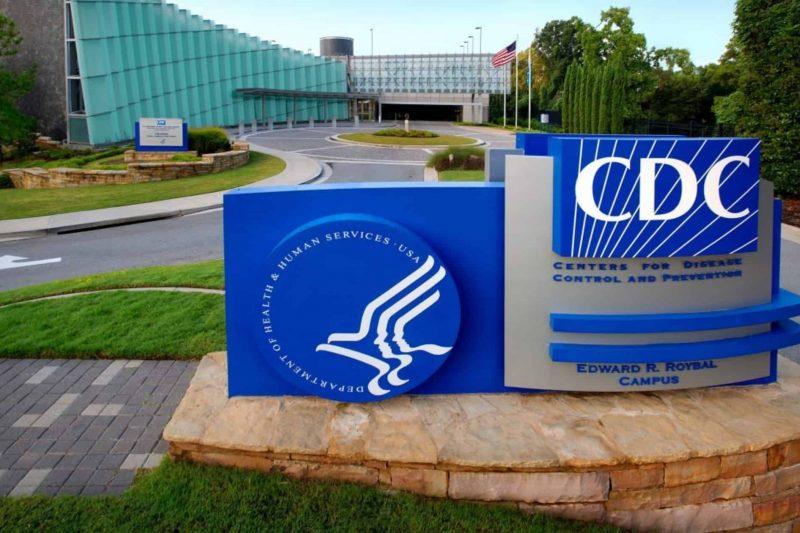
In response to the COVID-19 Pandemic, the Center for Disease Control (“CDC”) ordered a new moratorium on residential evictions through October 3, 2021. This contradicts previous statements by the CDC that their previous moratorium, which was set to expire on July 31, 2021, would be their final one.
What is different about this new Moratorium?
Instead of a blanket moratorium on evictions, the new Moratorium only applies in counties with “substantial” or “high” rates of COVID-19 transmission. “Substantial” and “high” are defined within the order pursuant to a numerical formula. Approximately 80 percent of counties in the United States fall into these categories. While this order would appear to be more landlord-friendly, it will only lead to more confusion for when an eviction can proceed. For example, if a county falls below the required rate for 14-days the moratorium would be lifted, but if the rate goes back up to levels dictated by the CDC, the Moratorium will go back in place. This would likely result in eviction proceedings being initiated then stayed and vice-versa, depending on the rates of COVID-19 transmission in that county.
How will the Courts react to the new Moratorium?
While the new moratorium is still in its infancy, the Courts will likely see the same legal challenges brought by Landlords across the country. One important issue that Courts across the country will have to consider is how the United States Supreme Court ruled on the previous moratorium.
In Alabama Assn. of Realtors v United States Dept of Health and Human Services, an assortment of property owners and realtor trade associations filed suit against the CDC challenging the moratorium. In a 5-4 decision, the U.S. Supreme Court left the previous moratorium in place. Chief Justice Roberts along with Justices Breyer, Kagan, Sotomayor, and Kavanaugh voted to deny lifting the previous moratorium. However, in a separate concurrence, Justice Kavanaugh wrote that while the lower court was correct that the CDC had exceeded its existing statutory authority, the Court should not lift the eviction moratorium given the pending expiration of the moratorium on July 31, 2021. He went on to write that any further extension of the eviction moratorium would require, “clear and specific congressional authorization.” Justices Thomas, Alito, Gorsuch, and Barrett would have granted the application to vacate the stay and have the order invalidated nationwide immediately.
As this new Moratorium was done without congressional authorization, Courts will have to wrangle with how much of an influence Justice Kavanaugh’s concurrence should have in their decision-making. It will only be a matter of time before this new Moratorium is before the Supreme Court. Justice Kavanaugh, who represented the swing vote in the prior decision will likely not be as lenient towards the CDC.
What is the current state of Evictions in New York?
While the CDC has extended their nationwide moratorium, the state legislature in New York has yet to extend their statewide moratorium. On May 4, 2021, Governor Cuomo extended the COVID-19 Emergency Eviction and Foreclosure Prevention Act of 2020. This extension acts to prolong the moratorium on residential and commercial evictions until August 31, 2021 for tenants who have suffered a COVID-related hardship. It is unknown at this time if a further extension will be passed by the State.
Have Questions About the Eviction Moratorium?
Clair Gjertsen & Weathers PLLC continues to monitor this ever-changing landscape. For additional questions regarding the implications of these decisions and related landlord/tenant issues, we invite you to contact Clair Gjertsen & Weathers PLLC by calling 914-472-6202. We look forward to hearing from you.
On August 3, 2021, Governor Andrew M. Cuomo signed into law Senate Bill S5785A, making the
affirmative allegation provision for high-cost loans and subprime home loans applicable to foreclosures
of residential mortgages covering one to four-family dwellings. Real Property Actions and Proceedings
Law (RPAPL) § 1302 has required plaintiffs foreclosing on high-cost loans and subprime home loans to
affirmatively allege in the complaint that they have the authority to commence the action and have
complied with certain statutory provisions prior to commencement. Starting on January 1, 2022, RPAPL
§1302 will apply to all residential mortgages covering a one to four-family dwelling, not just high-cost or
subprime loans.

Clair Gjertsen & Weathers PLLC is pleased to announce that partners Wendy Marie Weathers, Mary Aufrecht, and Erin K. Flynn will present “New York Foreclosure and Repossession Compliance” as a live webinar on August 31, 2021. They have been invited to address the topic of foreclosure due to their years of experience defending foreclosure actions.
More information on the program can be found here:
http://www.lorman.com/409163?discount_code=Q6432847&p=15999
You will be Assigned a Bankruptcy Trustee.
This trustee will be assigned to oversee your filing. The bankruptcy trustee administers your estate, will examine your paperwork, financials, and petition, and will preside at the meeting of your creditors.
Personal documents and Financials will need to be sent to your Assigned Bankruptcy Trustee.
Full disclosure is necessary when filing a bankruptcy. The trustee will require copies of all your bank statements, paystubs, profit and loss statements, tax returns, loan statements, and title and deed documentation. These documents will need to be provided to your trustee at least three weeks prior to your 341 Meeting. If you are worried about the potential of losing an asset, it is imperative that you speak with an attorney before filing a Chapter 7 Bankruptcy.
An Automatic Stay goes into effect.
This stay halts creditors from taking further action to collect against you, including but not limited to:
- Beginning or continuing legal proceedings against you
- Creating, perfecting or enforcing a lien against your property
- Contacting you by phone, mail or email
- Foreclosing on your home
- Repossessing or evicting you from your property
- Garnishing your wages
- Levying your bank accounts
The 341 Meeting is scheduled.
The 341 Meeting is also known as the meeting of your creditors. This trustee will get to ask you questions about your property, financial circumstances, and bankruptcy paperwork. It is generally the only time you have a meeting and your attorney will be present with you. Creditors have a right to attend the meeting but generally do not. The trustee is not a judge and generally, the meeting will take place in a general room and not a courtroom.
You might Receive Reaffirmation Agreements.
It is possible if you own a home, car or boat that those creditors will reach out to you asking you to reaffirm the debt, so that it will not be discharged during the bankruptcy process. A creditor cannot compel you to enter into a reaffirmation agreement, but depending upon the creditor, it could be a requirement of keeping your car. It’s always important to speak to an experienced professional when it comes to reaffirmation agreements, as just because a creditor sends you one, doesn’t mean you should execute it.
You Take a Personal Financial Management Course.
You will be required to complete a personal financial management course before you receive your discharge. This course can be taken online or via telephone. This course is in addition to a credit counseling course you took before filing your petition.
You Receive your Discharge.
Finally, you will receive your discharge. Your discharge gives you a fresh start and removes the legal obligation for you to repay any of your discharged debt.
Contact an Experienced Bankruptcy Attorney:
If you are considering a bankruptcy filing, it’s important that you speak with someone who has knowledge about the field. Bankruptcy is incredibly procedural, and you do not want your filing dismissed or worse, loss of an important asset for a technicality. Clair Gjertsen & Weathers PLLC have been practicing in this field for decades. Please give us a call to schedule a free consultation, 914.472.6202.
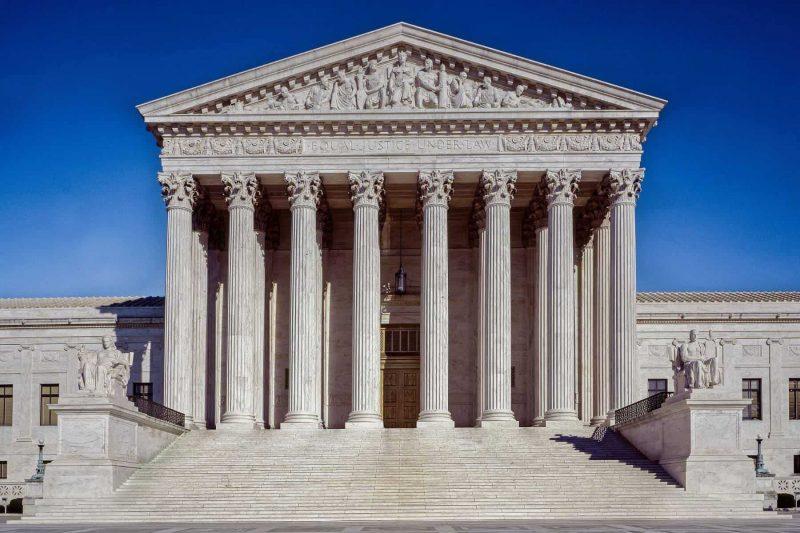
Supreme Court upholds CDC Eviction Moratorium, but the end is in sight.
In response to the COVID-19 Pandemic, the Center for Disease Control (“CDC”) ordered a nationwide moratorium on residential evictions with the latest extension through July 31, 2021. The CDC has also announced that this will be the final extension of the moratorium. Since its inception, however, the moratorium has been the subject of numerous lawsuits with courts from across the country ruling on its constitutionality. Now, after much discussion, the Supreme Court has weighed in on the matter.
Eviction Moratorium Lawsuit
In the District of Columbia, an assortment of property owners and realtor trade associations filed suit against the CDC challenging the moratorium. In Alabama Assn. of Realtors v United States Dept of Health and Human Services, No. 1:20-cv-003377 (D.D.C. May 5, 2021), the District Court ruled that while CDC has comprehensive rulemaking powers, the moratorium on residential evictions surpassed its authority. In response, the CDC requested that the decision be stayed to allow time for them to appeal, which was granted by the District Court. This ruling was appealed by the Alabama Association of Realtors and eventually made its way to the United States Supreme Court.
U.S. Supreme Court Upholds CDC Eviction Moratorium, but the End is in Sight
In a narrow 5-4 decision, the U.S. Supreme Court left the eviction moratorium in place. Chief Justice Roberts along with Justices Breyer, Kagan, Sotomayor, and Kavanaugh voted to deny lifting the moratorium. In a separate concurrence, Justice Kavanaugh wrote that while the District Court was correct that the CDC had exceeded its existing statutory authority, the Court should not lift the eviction moratorium given the pending expiration of the moratorium on July 31, 2021. By allowing the moratorium to remain in place until then, “those few weeks will allow for additional and more orderly distribution of the congressionally appropriated rental assistance funds.” He went on to write that any further extension of the eviction moratorium would require, “clear and specific congressional authorization.” Justices Thomas, Alito, Gorsuch, and Barrett would have granted the application to vacate the stay and have the order invalidated nationwide immediately.
Justice Kavanaugh in his concurrence was influenced by the CDC announcing that the moratorium will not be extended further. With the CDC not inclined to impose any further extensions, July 31, 2021, marks the end of the much-litigated nationwide eviction moratorium. As such, Landlords will be allowed to proceed with their evictions nationwide unless further prohibited by state restrictions.
Current State of Evictions in New York
While the CDC nationwide moratorium is ending soon, the state legislature in New York has added additional roadblocks for landlords. On May 4, 2021, Governor Cuomo extended the COVID-19 Emergency Eviction and Foreclosure Prevention Act of 2020. This extension acts to prolong the moratorium on residential and commercial evictions until August 31, 2021 for tenants who have suffered a COVID-related hardship. It is unknown at this time if a further extension will be passed by the State.
Have Questions About the Eviction Moratorium in New York?
Clair Gjertsen & Weathers PLLC continues to monitor this ever-changing landscape. For additional questions regarding the implications of these decisions and related landlord/tenant issues, we invite you to contact Clair Gjertsen & Weathers PLLC by calling 914-472-6202. We look forward to hearing from you.