NY & CT Foreclosure & Bankruptcy Attorneys
Schedule A Free Consultation 914.472.6202


If you have equity in your home and you file for bankruptcy, there are certain requirements that must be met in order to keep your home. In both a personal Chapter 7 or Chapter 13 Bankruptcy, you can protect assets with a bankruptcy homestead exemption. Each state has a list of exemptions, so the property type and amount of equity you can protect using state exemptions varies widely and these exemptions can change every couple of years.
For example, in New York, as of April 1, 2021, the homestead exemption for properties located in Duchess, Albany, Colombia, Orange, Saratoga, and Ulster Counties is $149,975. In Kings, Queens, New York, Bronx, Richmond, Nassau, Suffolk, Rockland, Westchester and Putnam counties, the homestead exemption as of April 1, 2021 is $179,975. All other counties in New York as of April 1, 2021 is $89,975.
Homestead Exemption in a Personal Chapter 7 Bankruptcy:
If you have more equity than the homestead exemption allows for, then the court-appointed trustee in your Chapter 7 bankruptcy will sell the property and use the proceeds above your exemption amount to pay off some of your unsecured creditors, like credit cards and medical bills.
- Example 1:
- David lives in Westchester County and the fair market value of his home is $500,000.00. If David owns his home free and clear (no mortgage), and filed a Chapter 7 bankruptcy due to credit card debt, the bankruptcy trustee would be able to sell his home and use the proceeds of the sale , minus the homestead exemption to pay off the creditors.
- Example 2:
- James live in Orange County and the fair market value of his home is $250,000.00. James owns the home subject to a mortgage, where the balance is $150,000.00. Therefore, James only has $100,000.00 in equity and he files a Chapter 7 bankruptcy, James’ home would be protected, as he is under the homestead exemption of $149,975.00.
Homestead Exemption in a Personal Chapter 13 Bankruptcy:
If you have more equity than the homestead exemption allows for, then you won’t necessarily be forced to give up your property. Instead, you will have to pay your creditors the non-exempt portion of equity into your bankruptcy plan.
- Example:
- Michelle lives in Rockland County and the fair market value of her home is $200,000.00. Michelle owns the home free and clear (no mortgage). Michelle’s homestead exemption is $179,975. Therefore, she is over the exemption by $20,025.00. This means Michelle will have to structure her Chapter 13 payment plan so that the unsecured creditors will receive at least $20,025.00 over the life of the plan. This amount is in addition to any other debts your plan payment must cover.
How to Find the Right Bankruptcy Lawyer in New York and Connecticut
It is incredibly important that in order to avoid property loss, you consult with an experienced attorney who knows the ins and outs of bankruptcy exemptions. CGW has been helping people through the bankruptcy process for the last 40-years. We offer free initial consultations to see if bankruptcy is the best fit and, if so, what type of bankruptcy would best fit your needs. Please give us a call at 914.472.6202.

As discussed in a previous blog post, discharging student loans in a bankruptcy can be an arduous task. However, a recent Court of Appeals for the Second Circuit decision addressed private student loan discharge in its applicability and the legislative intent of 11 U.S.C. § 523(a)(8)(A)(ii).
In In Re Homaidan No. 20-1981 (2d Cir. July 15, 2021), the Second Circuit reviewed a decision by the Eastern District of New York, wherein the question before the Court was whether a private loan provided by Navient constituted an “educational benefit” and thus, an exception to discharge pursuant to 11 U.S.C. § 523(a)(8)(A)(ii). 11 U.S.C. § 523(a)(8)(A)(ii) excepts from discharge any obligation to repay funds received as an educational benefit, scholarship, or stipend.
Facts of the Case:
Hilal K. Homaidan had originally received a bankruptcy discharge in 2009. The discharge order was ambiguous as to whether the Navient loans were discharged. Thereafter, Navient pursued repayment and Homaidan complied. After paying off his loans in full, Homaidan reopened the bankruptcy case and sued Navient seeking, among other things, actual damages for Navient’s violation of the discharge order. After commencing the lawsuit against Navient, Navient filed a motion to dismiss alleging that its student loans were excepted from discharge pursuant to 11 U.S.C. § 523(a)(8)(A)(ii). The Eastern District denied Navient’s motion finding that Navient’s loans were not excepted from discharge.
Second Circuit Decision:
The Second Circuit affirmed the Eastern District’s holding and distinguished between private loans issued by a lender which may be used to fund a student’s college education, among other expenses, and those made through the college’s financial aid office which are made solely to cover a student’s cost of attendance. The Second Circuit also emphasized the importance of the plain meaning of the statutory text and if Congress’ intent was to except for discharge all private loans, it would have stated so.
Fifth and Tenth Circuit Court of Appeals Decisions:
The Second Circuit is now the third Circuit court to find that a private loan does not support an except for discharge under 11 U.S.C. § 523(a)(8)(A)(ii). The Fifth Circuit Court of Appeals in In Re Crocker No. 18-20254 (October 21, 2019) and the Tenth Circuit Court of Appeals in In Re McDaniel No. 18-1455 (August 31, 2020) both found that private loans were not an exception to a bankruptcy discharge.
How are private student loan bankruptcy claims affected now?
The burden is now on the creditor to prove that the loan is a “qualified education loan” as defined in the Internal Revenue Code Section 221(d). In order for the loan to be considered non-dischargeable the creditor will have to show that the “qualified education loan” was used solely to pay “qualified higher education expenses” defined as the “cost of attendance” at an “eligible educational institution”. If the Creditor is unable to prove these elements, then the loan would be considered dischargeable. However, even if the Creditor proves these elements, if the borrower/debtor can establish an undue hardship, there is still the possibility of a discharge.
We are here to help you with your Student Loans:
Given the complexities of discharging student loans in bankruptcy, it is imperative to contact an experienced bankruptcy law firm. Clair Gjertsen & Weathers, PLLC is an experienced bankruptcy law firm who has helped thousands of people in financial distress. We understand that student loans can be overwhelming and daunting and we are here to help you through the process. Please give us a call to schedule a free consultation at 914.472.6202.
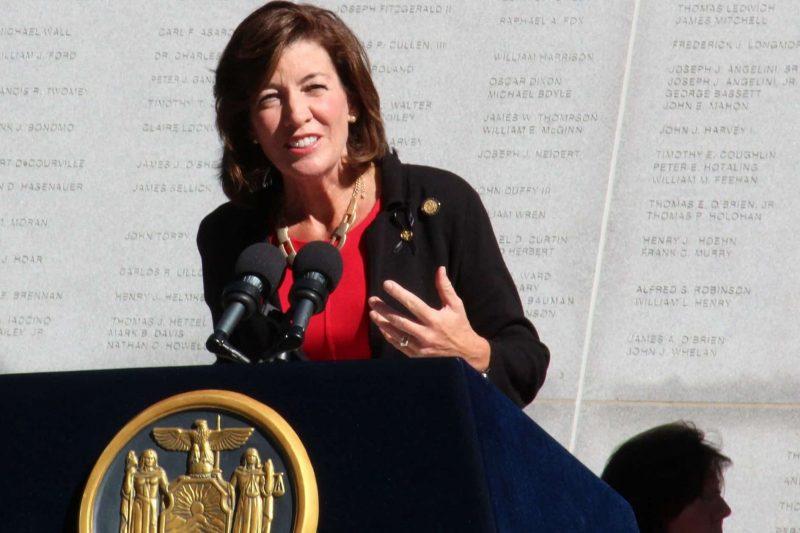
On September 2, 2021, Governor Hochul signed a new Moratorium on COVID-19 related to Evictions and Foreclosures. “The pandemic has created unimaginable anxiety for families and business owners who have lost income and are struggling to pay the rent every month.” Governor Hochul said. “To help remedy the Supreme Court’s heartless decisions striking down the New York and the Biden administration’s moratorium on evictions, we are enacting a new moratorium on residential and commercial evictions and extending the protections of New York’s Safe Harbor Act to January 15. These steps will alleviate the crisis facing vulnerable New Yorkers who are suffering through no fault of their own.”
The moratorium applies to Residential and Commercial Evictions, Residential and Commercial Foreclosures and Tax Lien sales. The key difference between this legislation and the original COVID-19 Emergency Eviction and Foreclosure Prevention Act, is that there is a carve out for landlords and lenders that if they have a good faith belief that the tenant or borrower has not experienced a hardship, a motion can be made and the court shall grant a hearing to determine whether to find the hardship claim as invalid.
Residential Evictions:
For tenants who have endured a COVID related hardship, this legislation places a moratorium on residential evictions until January 15, 2022. Tenants must submit a hardship declaration to either the landlord or Court to prevent the eviction. Landlords can proceed with evictions however for tenants who do not submit a hardship declaration or if the tenant is causing nuisance, safety or health hazards for other tenants.
Commercial Evictions:
For commercial tenants who have endured a COVID related hardship, this legislation places a moratorium on commercial evictions until January 15, 2022. This legislation applies to small business with under 50 employees that demonstrate a COVID related hardship. Commercial tenants must submit a hardship declaration to either the landlord or Court to prevent the eviction.
Residential Foreclosure Proceedings:
For borrowers in default on their mortgage payments, this legislation places a moratorium on foreclosure proceedings until January 15, 2022. Borrowers who own 10 or fewer residential dwellings can file a hardship declaration with their mortgage lender or the court to prevent or stay their foreclosure.
Commercial Foreclosure Proceedings:
The legislation places a moratorium on commercial foreclosure proceedings until January 15, 2022.
Tax Lien Sales
The legislation prevents local governments from engaging in tax lien sales or a tax foreclosure until at least January 15, 2022.
Need Eviction or Foreclosure Help?
If you are late on rental payments or your mortgage payments, now is the time to talk to an attorney. We can help you navigate through this difficult time and come up with solutions to best fit your needs. Please give us a call at 914.472.6202.
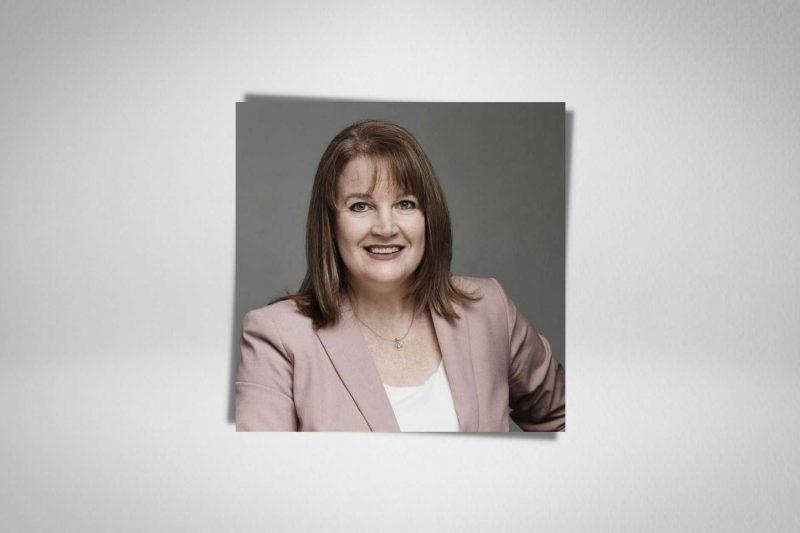
Immediate Past President of the Westchester County Bar Association, Wendy Marie Weathers, has shared in the WCBA Member Spotlight her challenges in forming Clair Gjertsen and Weathers PLLC, a law firm concentrating in the areas of foreclosure defense, bankruptcy, and landlord-tenant law, and leading the WCBA as President during the COVID 19 pandemic.
Click to read the full article.
Want to reach Wendy? Contact Wendy Marie Weathers by calling 914-472-6202. She looks forward to hearing from you.

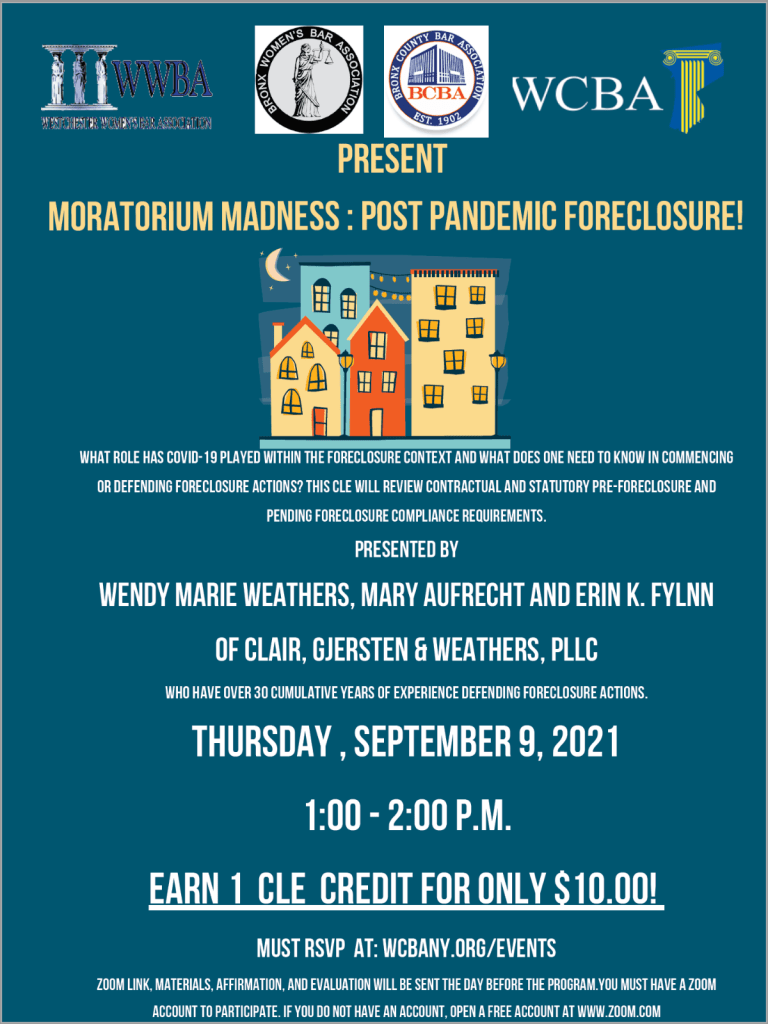
In Collaboration with the Westchester County Bar Association and Bronx Women’s Bar Association
What role has COVID-19 played within the foreclosure context and what does one need to know in commencing or defending foreclosure actions? This CLE will review contractual and statutory pre-foreclosure and pending foreclosure compliance requirements.
Presented By
Wendy Marie Weathers, Mary Aufrecht and Erin K. Flynn of Clair, Gjersten & Weathers, PLLC who have over 30 cumulative years of experience defending foreclosure actions.
THURSDAY , SEPTEMBER 9, 2021
1:00 – 2:00 P.M.
EARN 1 CLE CREDIT FOR ONLY $10.00!
MUST RSVP AT: WCBANY.ORG/EVENTS
Download PDF
Zoom link, materials, affirmation, and evaluation will be sent the day before the program. You must have a zoom account to participate. If you do not have an account, open a free account at zoom.us.
In response to the COVID-19 Pandemic, the Center for Disease Control (“CDC”) ordered a new moratorium on residential evictions through October 3, 2021. Despite the numerous issues the Supreme Court has with the previous moratorium, the CDC issued the new Moratorium for counties with “substantial” or “high” rates of COVID-19 transmission. Now, the United States Supreme Court has issued a decision on the constitutionality of the new Moratorium.
In a 6-3 decision, the U.S. Supreme Court sided with an assortment of property owners and realtor trade associations that challenged the CDC on their authority to issue a sweeping Moratorium on residential evictions. In an unsigned opinion, the High Court after giving “careful review” of the case “makes clear that the applicants are virtually certain to succeed on the merits of their argument that the CDC has exceeded its authority.” Furthermore, in line with their decision on the previous CDC moratorium, the Court stated, “It would be one thing if Congress had specifically authorized the action that the CDC has taken. But that has not happened…Instead, the CDC has imposed a nationwide moratorium on evictions in reliance on a decades-old statute that authorizes it to implement measures like fumigation and pest extermination. It strains credulity to believe that this statute grants the CDC the sweeping authority that it asserts.” Under this ruling, the CDC does not possess the authority to issue a Moratorium on evictions unless given specific authority to do so by Congress. As such, Landlords will be allowed to proceed with their evictions nationwide unless further prohibited by state restrictions.
What is the current state of Evictions in New York?
While the Moratorium issued by the CDC has ended, the state legislature in New York has yet to extend their statewide moratorium. On May 4, 2021, the previous Governor Cuomo extended the COVID-19 Emergency Eviction and Foreclosure Prevention Act of 2020. This extension acts to prolong the moratorium on residential and commercial evictions until August 31, 2021 for tenants who have suffered a COVID related hardship. It is unknown at this time if a further extension will be passed by the State.
Have Questions About the Eviction Moratorium?
Clair Gjertsen & Weathers PLLC continues to monitor this ever-changing landscape. For additional questions regarding the implications of these decisions and related landlord/tenant issues, we invite you to contact Clair Gjertsen & Weathers PLLC by calling 914-472-6202. We look forward to hearing from you.